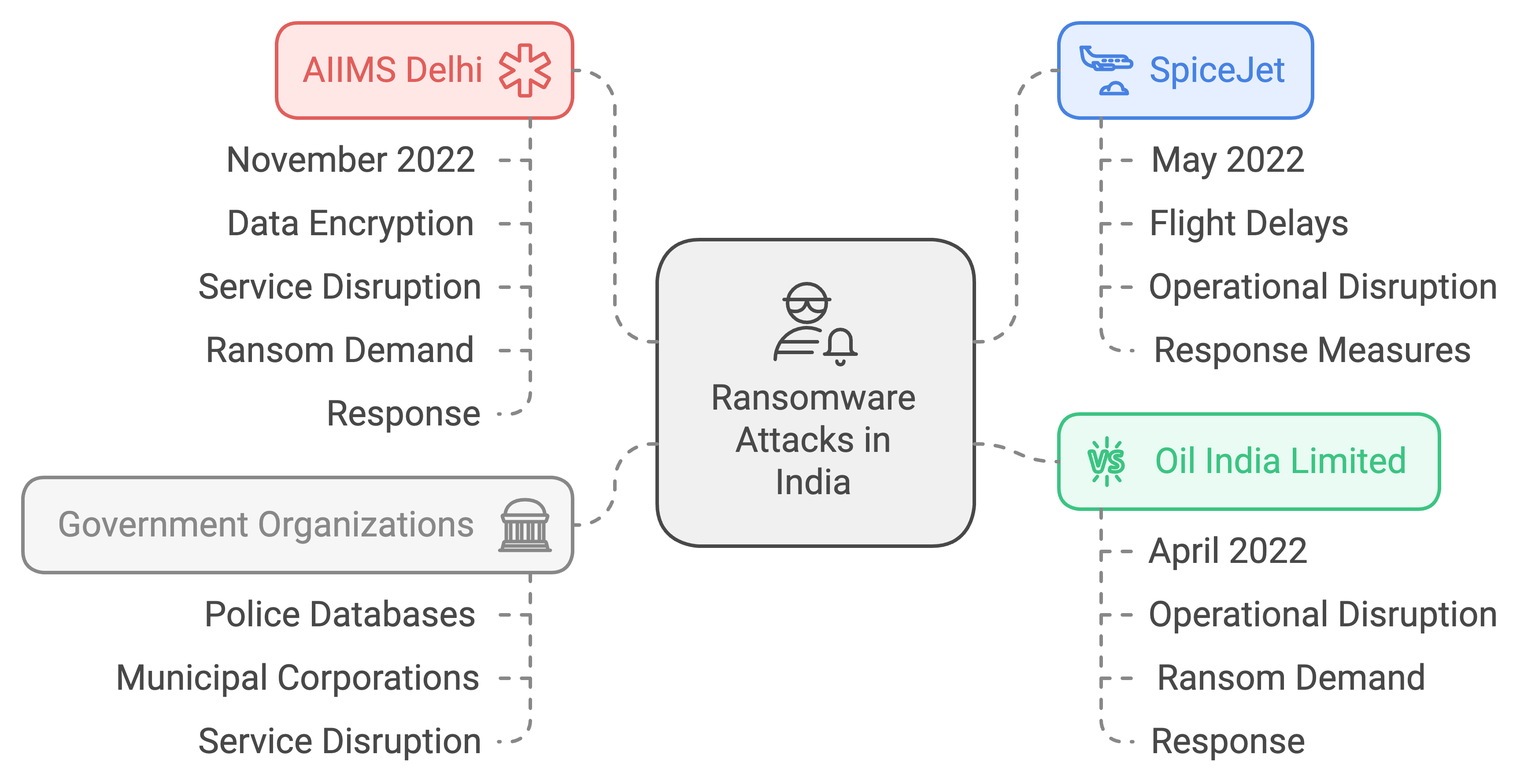
Ransomware attacks in India have been escalating, targeting critical sectors such as healthcare, aviation, and oil industries. These attacks not only cause financial damage but also disrupt essential services, raising serious concerns about India’s cybersecurity readiness. This in-depth analysis explores recent high-profile ransomware incidents, examines the factors contributing to India’s vulnerability, and provides recommendations to safeguard against future attacks.
Recent Ransomware attack Incidents in India
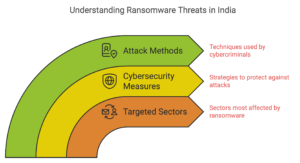
1. AIIMS Delhi (November 2022)
One of the most severe attacks in recent memory involved the All India Institute of Medical Sciences (AIIMS) in New Delhi. Hackers encrypted patient records, forcing the hospital to halt digital services for weeks. The attackers demanded a ransom of ₹200 crore ($24 million) in cryptocurrency, though authorities refused to comply. This attack highlighted vulnerabilities in healthcare infrastructure.
2. SpiceJet Airlines (May 2022)
SpiceJet, a major airline in India, was hit by a ransomware attack that delayed flights and disrupted check-in systems. Although the airline contained the incident, it exposed potential weaknesses in the aviation sector’s cybersecurity measures, risking passenger safety and operations.
3. Oil India Limited (April 2022)
In another significant attack, Oil India Limited (OIL) faced a ransomware incident at its headquarters in Assam. Hackers demanded ₹57 crore ($7 million) to decrypt the company’s data. Although the attack did not impact oil production, it disrupted internal communications, demonstrating how critical infrastructure remains vulnerable.
4. Ransomeware Attacks on State Governments and Municipalities
Several Indian state departments, including police databases and municipal corporations like those in Pune and Telangana, have been recent targets. These attacks have disrupted public services, exposing weaknesses in state-run digital infrastructure.
Why India is a Prime Target for Ransomware
Why India is a Prime Target for Ransomware Attacks
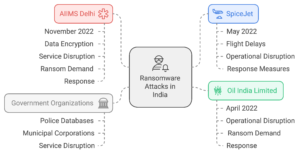
India’s digital transformation has been rapid, but this growth has not been matched by investments in cybersecurity. Here are some reasons why India is increasingly targeted:
Outdated IT Infrastructure: Many organizations, especially in the public sector, rely on outdated systems lacking the latest security patches.
Cybersecurity Awareness Gaps: Small and medium enterprises (SMEs) often lack robust cybersecurity protocols, making them easy targets.
Remote Work Vulnerabilities: The shift to remote work post-pandemic has expanded the attack surface, as home networks are typically less secure than corporate ones.
Ransomware-as-a-Service (RaaS): The rise of RaaS models allows cybercriminals to rent ransomware tools, making it easier for less skilled attackers to launch sophisticated attacks.
Common Attack Vectors
Phishing Emails: Cybercriminals often use phishing emails with malicious attachments to gain access to systems.
Exploiting Unpatched Systems: Attackers frequently exploit vulnerabilities in unpatched software and legacy systems to infiltrate networks.
Social Engineering: Using tactics that manipulate individuals into revealing sensitive information, leading to unauthorized access.
Steps to Mitigate Ransomware Risks
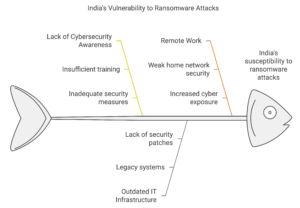
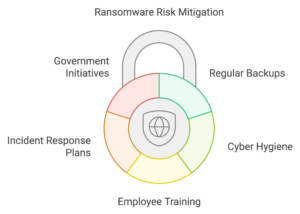
1. Regular Data Backups
Organizations should perform frequent data backups and store them offline to prevent data loss during an attack.
2. Cyber Hygiene Practices
Implement multi-factor authentication (MFA), enforce strong password policies, and ensure all systems are regularly updated with the latest security patches.
3. Employee Training Programs
Educate employees on identifying phishing attempts, social engineering, and other common cyber threats.
4. Incident Response Plan
Businesses must have a robust incident response plan to quickly isolate and mitigate the impact of a ransomware attack.
5. Government Initiatives
The Indian government, through agencies like CERT-In (Indian Computer Emergency Response Team), has been actively pushing for improved cybersecurity policies. The National Cyber Security Policy aims to protect digital infrastructure and enhance resilience against cyber threats.
Conclusion
With the frequency and sophistication of ransomware attacks on the rise, Indian organizations and institutions must prioritize cybersecurity. Investing in better infrastructure, employee training, and proactive cybersecurity measures is crucial for ensuring business continuity and safeguarding sensitive information.